Over more than eight years of managing ad campaigns and building e-commerce stores, I've noticed one pattern again and again: most business owners spend the bulk of their budget getting customers to see them for the first time, and far less getting customers to remember them.
The result? Customer acquisition cost rises every month, because the brand starts from zero with every new customer.
The question worth your time isn't "How many people saw my ad?" It's "Will the customer remember me when they need what I offer?"
In this article, I share seven practical steps to build customer loyalty and strengthen your brand's place in your audience's mind. At the end, you'll find the part most people ignore: how to measure it with real numbers.
1. Brand identity: know what sets you apart in one sentence
Memorable brands don't try to be everything to everyone. They have one clear reason customers associate with them: a signature product, a different experience, or a style that's unmistakably theirs.
Customers don't remember everything you offer. They remember what makes you different.
Try this now: write one sentence explaining why a customer chooses you over a competitor. If you need a whole paragraph, or your answer is "quality and fair prices," that's the first problem to solve before any ad campaign.
2. Customer experience is your real advertisement
An ad convinces the customer to try you once, but the experience itself decides whether they come back.
Every touchpoint leaves an impression: the product page, how easy checkout is, the order confirmation message, shipping speed, packaging, and how you handle any issue after purchase.
Take an online store that spends a solid budget on TikTok and Snapchat ads, but shipping is slow and order messages feel generic and cold. The ad succeeded in bringing the customer in, and the experience succeeded in pushing them away. Worse, none of this shows up in the campaign report.
Try this now: buy from your own store or use your own service as if you were a new customer, and note every moment you felt hesitation or frustration.
3. Content that builds memory, not just views
High views don't mean your audience will remember you. The more important question: what stayed in the viewer's mind after they closed the app?
Strong content has a style people recognize before they read the account name: consistent colors, a clear tone, and recurring formats the audience gets used to. Chasing every new trend may bring lots of views, but it doesn't build a personality.
Try this now: choose three fixed content formats for your brand (for example: a quick tip, behind the scenes, a customer question) and stick with them for a full month.
4. Smart repetition: show up in more than one place
A brand is rarely built from a single appearance. A customer might see you today in a video, a few days later in an ad, then find you in Google search results, then hear about you from a friend. Every appearance builds familiarity, and familiarity raises the chance you'll be chosen.
This is where remarketing comes in: reaching people who visited but didn't buy, with a different message from the first one, not the same ad on repeat.
Try this now: create an audience of visitors from the last 30 days in Meta, TikTok or Google Ads, and show them content that answers why they hesitated: customer reviews, your return policy, or how to use the product.
5. Influencer marketing: the right fit, not the biggest name
An influencer whose audience trusts them saves you a long road, because they give your brand something traditional ads struggle to deliver: trust and context.
But follower count isn't the measure. What matters is that their audience matches your customer, and that you give them an idea to present in their own style, not a memorized script to read.
Try this now: give each influencer a unique discount code or a link with UTM parameters, so you know who brought in real sales, not just views.
6. One voice across every channel
One of the fastest ways to weaken your brand is to look like a different brand on every platform: formal language on the website, a completely different style on Instagram, and a design that changes with every campaign.
Flexibility is needed, but there must be one thread connecting everything: colors, fonts, tone of voice, and even how you reply to comments.
Consistency doesn't mean repetition. It means evolving without losing your identity.
Try this now: prepare a one-page brand guide covering your colors, fonts, the words you use and the words you avoid, and share it with everyone who creates content for your brand.
7. The return visit matters more than the first
Acquiring a new customer matters, but real growth comes from the customer who returns. You don't pay to acquire a returning customer again, and they often buy more and recommend you.
After every campaign, ask yourself: how many people did we reach? Then ask the more important question: how many found a reason to come back?
Try this now: set up a post-purchase follow-up message (email or WhatsApp) that thanks the customer and helps them use the product, followed by a special offer on their second order after a period that fits your purchase cycle.
How do you measure whether your brand stays top of mind?
This is the part missing from most articles, even though it's the difference between a feeling and a fact. The memory you build around your brand shows up in the numbers, if you know where to look:
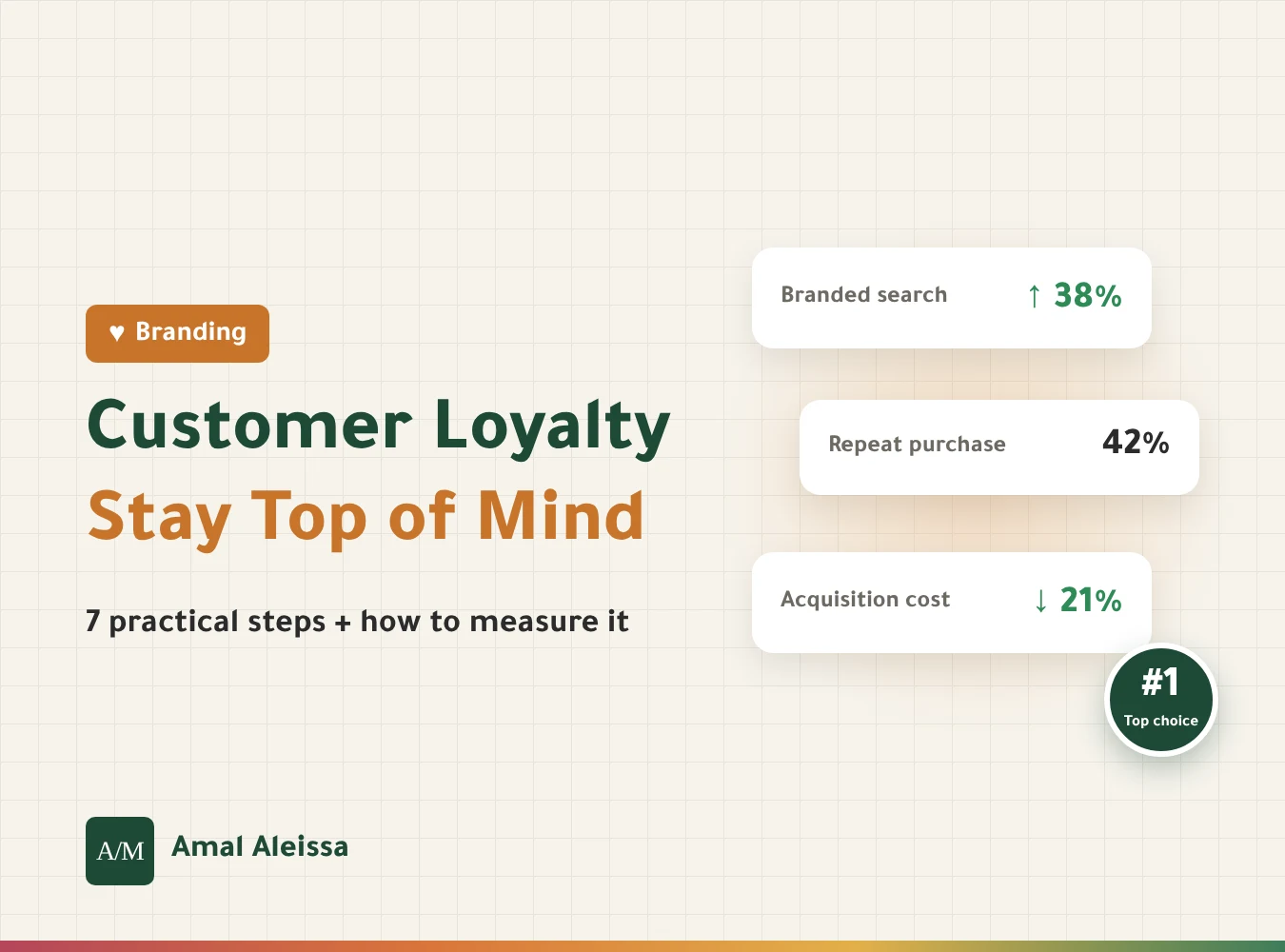
- Branded search: are more people searching for you by name? Track it in Google Search Console or Google Trends. Growth means people are starting to remember you.
- Direct traffic in GA4: a visitor who types your URL directly or arrives from a bookmark already knows you.
- Repeat purchase rate: what percentage of your customers bought more than once? This is the most honest indicator of loyalty.
- Customer acquisition cost over time: if your brand is really being built, you'll notice the cost stabilizing or dropping, because part of your sales comes without ads.
- A simple question at checkout: "How did you hear about us?" The answers reveal the impact of word of mouth and influencers that tracking tools don't show.
The takeaway
Success isn't about customers remembering you all the time. It's about being the first name that comes to mind when they need what you offer.
No single ad or viral video creates that. It comes from steady accumulation: a clear identity, a consistent experience, recognizable content, repeated presence, and numbers you track regularly.
In a market where options look alike, the memory you build around your brand may be the strongest competitive advantage you have.
Start with one of these steps this week, and check your numbers in a month.